Open Source
Intheon team members have developed — or co-developed — some of the most popular open-source tools used by researchers around the world for neural signal processing (primarily EEG). Here are some of them.
Lab Streaming Layer (LSL)
- A system for distributed signal transport, time synchronization and data collection.
- Provides unified collection of measurement time series over a network.
- Widely adopted by neurophysiological measurement device manufacturers.
- Sub-millisecond synchronization capable on typical LANs.
- Extensive range of supported measurement modalities including eye trackers, EEG systems, motion capture devices, keyboards, mice, trackballs, force plates and multimedia hardware.
- Provides a standard interface for data acquisition integration.
- Bindings available for Python, C#, Java, Matlab, Android, Unity, Rust.
Intheon Role: Christian Kothe developed LSL during his previous position at the Swartz Center for Computational Neuroscience, Inst. for Neural Computation, UCSD.
XDF (Extensible Data Format)
A general purpose file format that can hold multi-channel time series data from multiple modalities and different sampling rates together in a single file.
- Stores synchronized streams from many modalities including EEG, NIRS, MEG, fMRI, audio, etc.
- Rich per-stream metadata describing each signal stream.
- String-based timestamped event marker streams.
- Data streams support multiple data types (float, double, int, string).
- Support for high-precision numeric data, high sampling rates, high channel counts.
- The standard recording format for the Lab Streaming Layer (LSL).
- Readers available for Python, C++, Matlab, Julia.
Intheon Role: Christian Kothe co-developed XDF at USCD as the native recording format for the Lab Streaming Layer.

ASR (Artifact Subspace Reconstruction)
A powerful, component-based algorithm for electroencephalography (EEG) that automatically removes high-amplitude artifacts and transient noise.
- Automatically removes high-amplitude artifacts and transient noise from EEG.
- Component-based — reconstructs corrupted signal subspaces from clean reference data.
- Works for both offline data cleaning and real-time use.
- Widely used in clinical monitoring and brain-computer interfaces (BCIs).
- Available in EEGLAB as part of the "Clean_Rawdata" plugin (also developed by Intheon members).
Intheon Role: Christian Kothe developed ASR at the Swartz Center for Computational Neuroscience (SCCN), UC San Diego.
The Glass Brain
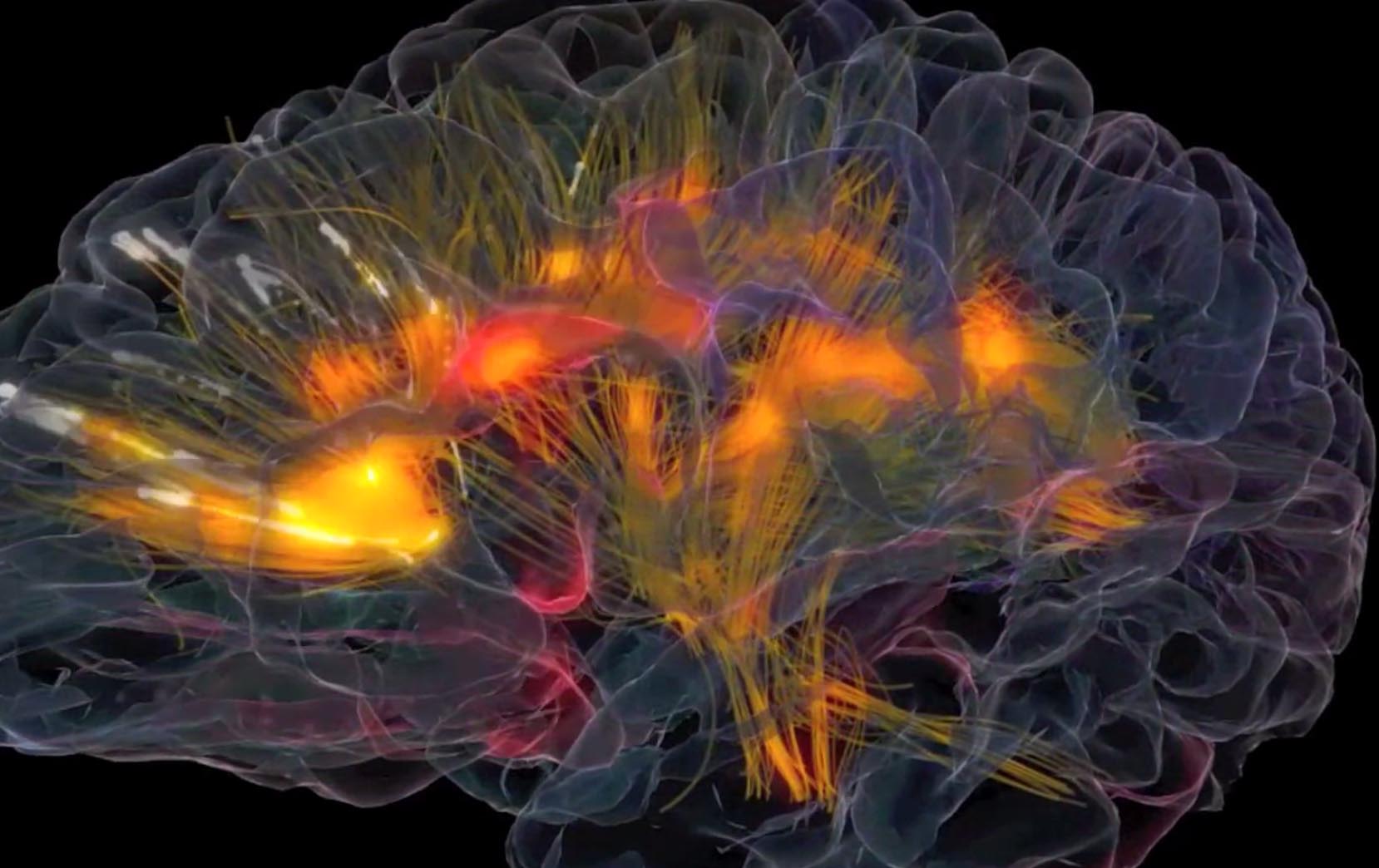
The world’s first interactive, real-time, high-resolution visualization of an active human brain, designed specifically for Virtual Reality.
- Anatomically realistic and navigable high-resolution MRI-based 3D brain model.
- Integrates cortical brain activity and connectivity, computed in real-time from an EEG headset, with structural fiber tracts estimated from diffusion tensor imaging.
- Virtual-reality compatible (Oculus Rift).
- Over 250,000 views of the Glass Brain on YouTube!
Intheon Role: Tim Mullen co-led development of the Glass Brain with Adam Gazzaley (Director, UCSF Neuroscape Lab). The brain mapping software was implemented by Tim Mullen and Christian Kothe using SIFT, BCILAB, and LSL software which they developed at the Swartz Center for Computational Neuroscience, Inst. for Neural Computation, UCSD.
BCILAB
- World’s most comprehensive open source toolbox for brain computer interface (BCI) design.
- Available as a plug-in for EEGLAB.
- GUI-driven or scriptable via MATLAB script.
- Facilitates rapid prototyping and evaluation of novel BCI paradigms.
- API support for real-time processing.
- Includes support for custom extensions.
- Supports batch processing for large study analysis.
Intheon Role: Christian Kothe developed BCILAB during his previous position at the Swartz Center for Computational Neuroscience, Inst. for Neural Computation, UCSD.
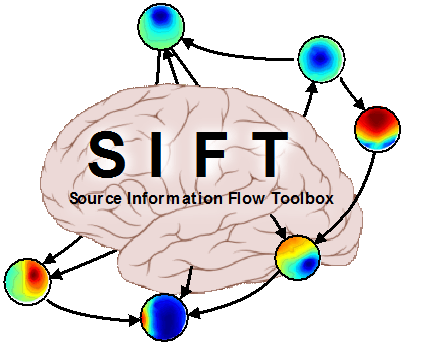
Source Information Flow Toolbox (SIFT)
- One of the most comprehensive open source toolboxes for connectivity analysis from EEG and MEG data.
- Integrated into the EEGLAB software environment.
- Modular architecture including modules for data pre-processing, model fitting and validation, connectivity analysis, statistics, visualization, group analysis, and realistic simulations of EEG dynamics.
- Includes a suite of methods for dynamical system identification, including regularized vector autoregression and linear and non-linear Kalman filtering.
- Over 15 measures of brain connectivity, including multivariate Granger causality, transfer function analysis, and coherence.
- Interactive visualization allowing analysis of source- or sensor-based connectivity across time, frequency, and spatial location.
Intheon Role: Tim Mullen developed SIFT as a graduate fellow at the Swartz Center for Computational Neuroscience, Inst. for Neural Computation, UCSD.
Measure Projection Toolbox
- An open source Matlab toolbox which solves the problem of combining EEG source and scalp projection across multiple subjects and sessions.
- Provides robust statistical measures of the spatial consistency of EEG dynamics across datasets.
- Available as a plug-in for EEGLAB.
- Transforms EEG into a 3-D cortical mapping method with near-cm resolution.
- Interactive cluster visualization and processing.
- Probabilistic multi-subject EEG independent component source comparison and inference.
Intheon Role: Nima Bigdely-Shamlo developed MPT during his PhD studies at the Swartz Center for Computational Neuroscience, Inst. for Neural Computation, UCSD.

HED
Intheon leads the field of EEG neuroinformatics as the main developer of open source HED and ESS technologies. The Hierarchical Event Descriptor (HED) tagging system is designed for description and analysis of event related EEG studies.
- Supports meta-analysis and data re-use for new hypothesis testing studies.
- Built on well-established community supported ontologies for experimental neuroscience.
- Extensible, user friendly event description system.
- Tools available for tagging, visualization, autocompletion and comparison.
- Simplifies data mining over large experimental data sets.
Intheon Role: Intheon is the primary curator of the HED standard. Open source HED tools are developed jointly by Prof. Kay Robbins (Univ. Texas, San Antonio) and Intheon.